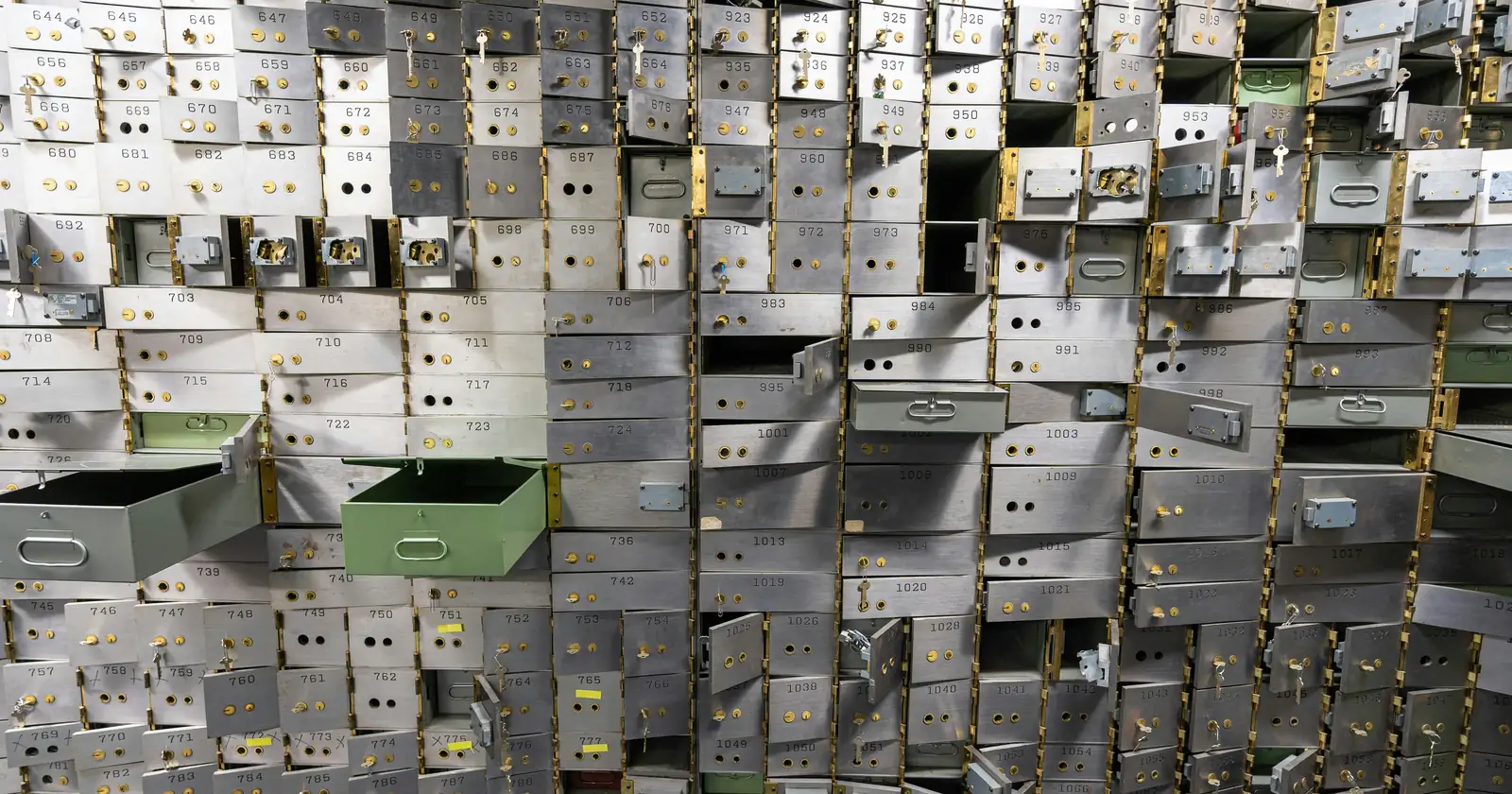
Depo accounts and the Central Securities Depository
Finmind editorial team · · Updated · 8 min read
What the Central Securities Depository (UzCSD) does, what a depo account is, how it links to your brokerage account and why member numbers matter.
In short
In Uzbekistan shares are electronic records on depo accounts, not paper certificates.
The Central Securities Depository keeps the single system that records who owns which securities.
Your broker keeps your own depo account, and holds its clients' securities in total at the depository.
Your right to a share passes to you when it is credited to your depo account, and a statement proves it.
Keep your details up to date with your broker and read your statements.
Start with a free Finmind account
It adds the market-wide order book and a practice simulator. Essentials, paid once, adds portfolio tracking from your broker's statements and orders through your own brokerage account. Premium adds valuation, the tax declaration and stop-loss orders.
What asset allocation is, how goals, time horizon and risk capacity shape your mix of cash, fixed income and shares, and what it means on the Uzbek market.
When you buy a share in Uzbekistan, you do not receive a certificate. Ownership exists as an entry on a depo account, and the system of those accounts has the Central Securities Depository (UzCSD) at its centre. Most investors never deal with the depository directly, because their broker does it for them, but knowing how it works tells you where your shares really are and what protects them. This guide explains the depository, the depo account and the numbers you meet along the way.
All legal points come from the Law on the securities market as published on lex.uz, checked on 26 September 2026.
Shares are records, not paper
Under the law, shares, corporate bonds, infrastructure bonds and depositary receipts are issued in book-entry form, as electronic records in accounting registers (article 4). A share you buy on the Republican Stock Exchange «Toshkent» (UZSE) is therefore an entry in those registers, and the right to it passes to you at the moment the credit entry is made on your depo account. That right is confirmed by a statement from the depo account (article 37).
Key terms
The law defines the words you will see in contracts and statements (article 3):
Depo account: the set of records in the accounting registers of an investment intermediary and of the Central Securities Depository that holds a depositor's securities and records the rights to them.
Depositor (deponent): a person who has a depo account.
Depo account statement: the document that certifies a depositor's rights to securities, issued by the investment intermediary and/or the Central Securities Depository.
Nominee holder: an investment intermediary or the Central Securities Depository that records and certifies rights to securities on the owner's instructions without being the owner.
Central Securities Depository: the organisation that provides a single system for holding securities, recording rights to them and recording their movement across depo accounts.
What the Central Securities Depository does
The law gives the depository a list of exclusive functions (article 39). Among them:
registering securities and keeping the documents that confirm their issue;
maintaining registers of securities holders;
maintaining the depo accounts of investment intermediaries and foreign nominee holders;
settling securities, and settling cash for trades on organised trading, in the established order;
keeping a single database of depositors;
assigning international codes (ISINs) to securities issued by residents of Uzbekistan;
collecting and systematising information on the movement of securities across depo accounts.
The depository describes the same list on its own site (uzcsd.uz, as of 26 September 2026). It is a joint-stock company, and its tariffs are approved by its governing body in agreement with the securities market regulator (article 38).
Two layers: the depository and your broker
Rights to securities are recorded on depo accounts opened at the Central Securities Depository, with an investment intermediary and/or with a foreign nominee holder (article 36). In the usual retail set-up there are two layers:
Your broker's records. Your broker, as an investment intermediary, keeps a depo account for you and records how many securities you own.
The depository's records. The broker's clients' holdings are recorded in total on the broker's own account at the Central Securities Depository.
The law places duties on the intermediary: it must record the quantity and par value of each depositor's securities, carry out operations on a depo account only on the depositor's written instructions (except where the law says otherwise), issue statements that confirm ownership, keep clients' information confidential and take part in the guarantee fund (article 27). That fund is formed at the stock exchange from part of each intermediary's commission income, to compensate investors for losses caused by an intermediary (article 23).
A worked example
The numbers are illustrative. Suppose three clients of one broker hold shares of the same company: 500, 1,200 and 300 shares. The broker's records show each client's own balance. At the depository, the broker's account shows 2,000 shares in total. If you sell 200 shares, your balance at the broker falls to 300 and, after settlement, the broker's total at the depository falls to 1,800, while the buyer's side rises by the same amount.
The custody chain
1Step 1: Your instruction.The broker carries out operations on your depo account only on your written instructions, except where the law says otherwise.
2Step 2: Your broker's records.The broker keeps a depo account for you and records how many securities you own.
3Step 3: The depository's records.Your broker's clients' holdings are recorded in total on the broker's own account at the Central Securities Depository.
4Step 4: Your proof.A depo account statement confirms what you own.
Your rights and duties as a depositor
Under article 41, a depositor may dispose of the securities on the depo account within the limits of the law, give the intermediary and/or the depository instructions and ask for reports on them, and receive statements of the account and reports on operations under the terms of the contract. A depositor must tell the intermediary and/or the depository about changes of authorised persons and of personal details, and must check the messages they send and report any errors promptly.
In practice: keep your passport and contact details up to date with your broker, read your statements, and ask for a depo account statement whenever you need proof of what you own.
Opening a depo account
UZSE describes the first steps for a new investor (trading system structure, as of 26 September 2026): choose a brokerage company that is a member of the exchange, and open an investment account with it. For this, the investor needs a Client Registration Profile from the Central Securities Depository. According to the exchange, the investor can instruct the broker to place orders one day after opening the account.
The depository also runs a mobile service, UzCSD, whose public offer describes remote opening of securities accounts with the depository and its partner intermediaries, and lists its fees, for example 0.05% of the base calculation amount for remotely opening a securities account (UzCSD offer, as of 26 September 2026). Fees can change, so check the current offer before you use the service.
Member numbers
Every firm that takes part in exchange trading is a member, and in the UZSE trading terminal fondbozori.uz each member is identified by a five-digit member number. The terminal's member register lists brokers, banks and depositories as well as system entries for the exchange and the depository. If you connect a brokerage account to a service that reads your holdings, you usually need the member number of the firm through which your brokerage account is held. Opening a brokerage account in Uzbekistan explains where to find it, and connecting your brokerage account to Finmind shows where it is entered.
Why the depository matters for dividends and coupons
Dividends go to the shareholders recorded in the register of shareholders drawn up for the relevant general meeting, and registers are built from the depository's records. That is why the timing of settlement matters: UZSE trading hours and settlement explains why a purchase made too late does not reach the register in time. Finmind's public payout calendar lists dividend and coupon payments published by the depository alongside bond coupons and maturities from the exchange.
Frequently asked questions
It is the set of records at your investment intermediary and at the Central Securities Depository that holds your securities and records your rights to them. Rights to a book-entry security pass to you when the credit entry is made on your depo account, and a depo account statement confirms them.
Usually not separately. Your broker, as an investment intermediary, keeps your depo account and holds clients' securities in total on its own account at the depository. UZSE notes that a new investor needs a Client Registration Profile from the depository, which the broker's process covers.
Your intermediary must keep information about your securities and operations confidential, except in cases set by law, such as written requests from the regulator, tax authorities, courts or investigators within their powers.
It is the number that identifies a member firm, such as a broker or bank, in the UZSE trading terminal. Services that connect to your brokerage account often ask for it. Your broker can tell you the correct number.
This article is for education only and is not investment advice. Investing in securities involves risk, including the loss of money you invest.
Key terms in this post
Depository
The organisation that records who owns which securities. In Uzbekistan it is the Central Securities Depository.
Face value
The amount the issuer repays when a bond ends, and the amount its coupons are calculated on.
Coupon
The interest a bond pays its holder, usually a fixed percentage of its face value, paid on set dates.